Future Planning for Students: How to Choose the Right Stream and Career Path
Future planning for students, made simple. Learn how to choose the right stream, assess fit, compare career paths, and plan Classes 8-12 clearly.

One stream choice can shape the next two years, and too many students make it under pressure instead of with clarity. UDISE+ 2024-25 shows a 75.1% secondary-to-higher-secondary transition rate, which means nearly one in four students does not move smoothly from Class 10 to Class 11, while girls transitioned at 77.9% and boys at 72.4% (UDISE+ 2024-25 report). That is why future planning for students matters in India.
Table of Contents
- Quick Answer, How Students Should Plan Their Future
- How to Choose the Right Stream After Class 10
- 1. Check aptitude, interest, and subject comfort
- 2. Match the profile to stream demands
- 3. Compare careers before finalising the stream
- 4. Keep a backup option
- Best Timeline for Career Planning, Class 8 to 12
- Class 8 to 9
- Class 10
- Class 11 to 12
- How Parents and Students Can Decide Without Conflict
- Use this 3-step method
- FAQ on Future Planning for Students
- How can students plan their future after Class 10?
- How do I choose the right stream after 10th?
- Why is future planning important for students?
- When should career planning start for students?
- Are psychometric tests useful for student career planning?
- How can parents help with future planning for students?
Quick Answer, How Students Should Plan Their Future
The system pushes choices too late
If you want a simple system, do these five things first:
- Assess fit early with a structured psychometric test.
- Shortlist two or three streams based on aptitude, interest, and marks.
- Map each stream to real career options, colleges, exams, and costs.
- Keep one backup plan that is realistic and affordable.
- Review the plan every six months as marks and interests evolve.
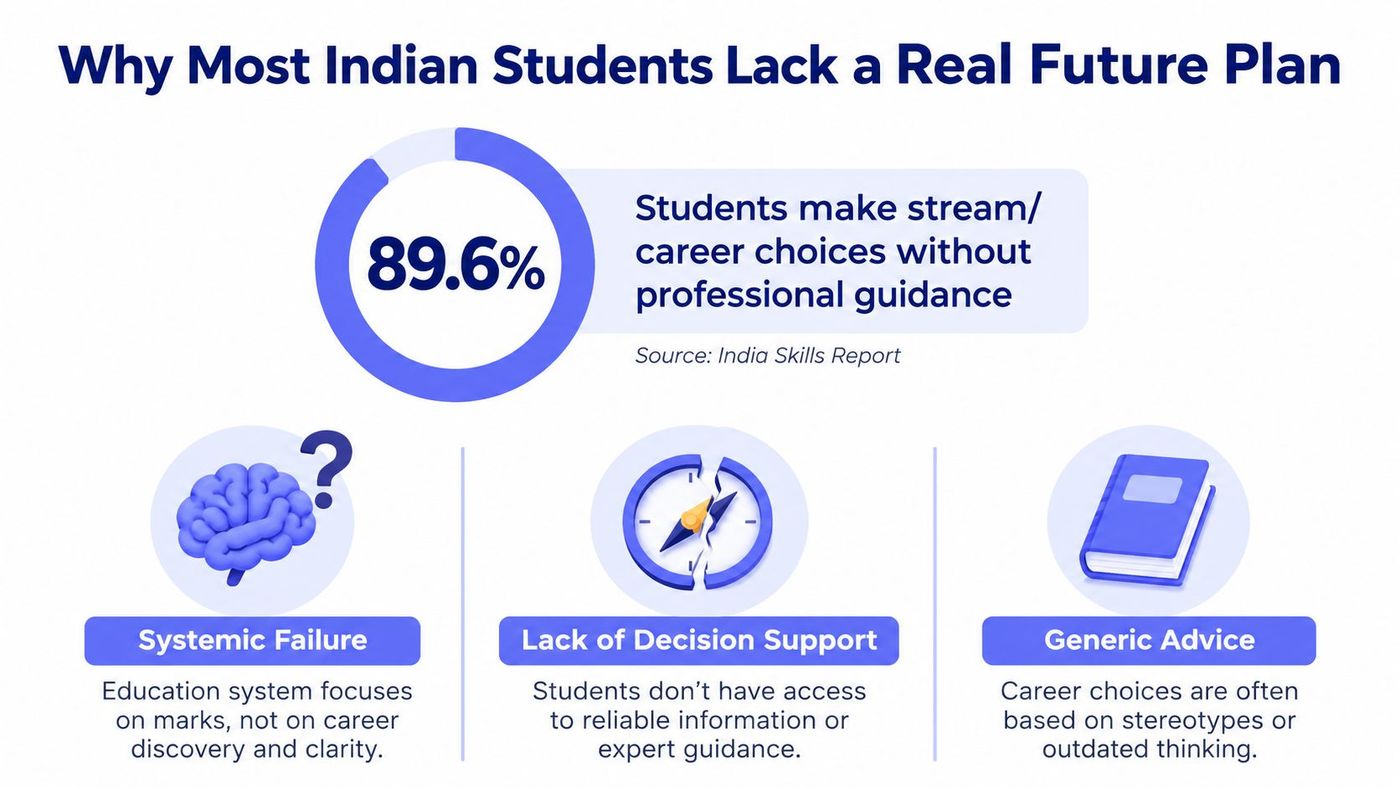
This matters because many students still make decisions without enough guidance. One widely cited India survey summary says 89.6% of students choose streams and careers without professional support (UN-backed India survey summary).
Simple rule: Choose a stream based on fit and future options, not status or pressure.
How to Choose the Right Stream After Class 10
Start with evidence, not assumptions.
1. Check aptitude, interest, and subject comfort
A good assessment should measure Aptitude, Interest, and Personality. StudyHQ's stream selection assessment is designed to help students connect their profile with suitable streams, career paths, and next-step planning. That makes it far more useful than generic online quizzes that give broad results without helping families make a real decision.
2. Match the profile to stream demands
- Science fits students comfortable with technical and analytical subjects.
- Commerce fits students who lean toward business, finance, numbers, or analysis.
- Arts/Humanities fits students strong in communication, social sciences, creativity, or people-focused fields.
3. Compare careers before finalising the stream
Do not choose Science, Commerce, or Arts as labels. Compare what each one can lead to, the entrance path, the workload, and the likely cost.
4. Keep a backup option
The wrong choice often happens when families plan only for one dream path. Shortlist a primary path, a backup, and a safety option.
Best Timeline for Career Planning, Class 8 to 12
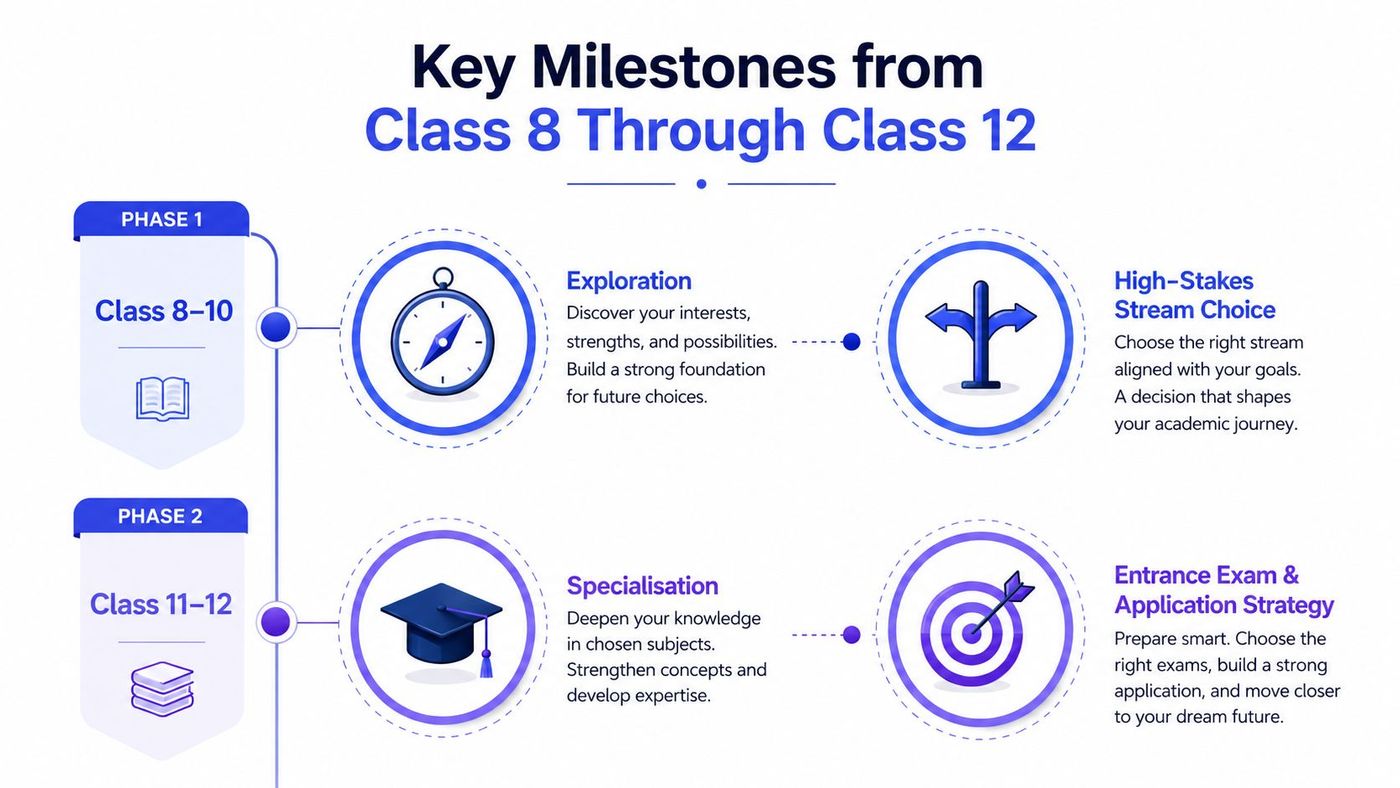
Class 8 to 9
- Explore different careers through talks, projects, and exposure.
- Track natural strengths in subjects and activities.
- Take one structured assessment by Class 9.
Class 10
- Shortlist two or three streams.
- Compare them against marks, aptitude, and budget.
- Decide based on what the student can sustain well.
Class 11 to 12
- Focus on subject mastery and entrance planning.
- Build one useful profile asset, project, internship, volunteering, or portfolio.
- Shortlist colleges, fees, and deadlines early.
A good roadmap is not complicated. It should simply answer:
- Which stream fits best?
- Which careers stay open through that stream?
- Which colleges and exams matter?
- What can the family realistically afford?
The 2025 survey data showed that only 10% of students were aware of course costs, with another summary noting that 90% lacked awareness of course costs (survey summary). Cost planning should start early, not during admissions.
If a family wants a more structured way to handle assessments, course mapping, and planning, StudyHQ's student guidance hub can support that process.
How Parents and Students Can Decide Without Conflict
Most disagreements come from fear, not facts. The best fix is to use shared evidence.
Use this 3-step method
- Start with the assessment report.
- Compare stream options on fit, cost, and career outcomes.
- Write down one final choice plus one backup.
| Common Issue | Better Way to Decide |
|---|---|
| Science vs Commerce | Compare the student's profile with what each stream demands. |
| Passion vs safety | Choose the option that fits both interest and realistic outcomes. |
| Private vs government college | Compare fees, scholarships, and likely outcomes. |
| Parent pressure vs student choice | Use the report, shortlist, and budget in the same discussion. |
For families who want a clearer framework, StudyHQ's guide for parents can help structure the conversation.
FAQ on Future Planning for Students
How can students plan their future after Class 10?
Students should combine aptitude, interest, marks, and budget. Start with an assessment, shortlist streams, compare career paths, and build a clear Class 11 to 12 plan.
How do I choose the right stream after 10th?
Choose the stream that best matches the student's strengths, subject comfort, and long-term direction. Do not decide based only on status or outside pressure.
Why is future planning important for students?
It helps students avoid rushed choices, wrong stream selection, and unnecessary stress while giving families a clearer roadmap.
When should career planning start for students?
Ideally by Class 8 or 9, so students have time to explore before Class 10 decisions begin.
Are psychometric tests useful for student career planning?
Yes, if they measure aptitude, interest, and personality properly and are used to guide discussion, not replace decision-making.
How can parents help with future planning for students?
Parents can help by focusing on fit, affordability, and realistic outcomes instead of pressure or prestige.
If your family is still unsure about stream choice, course fit, or college options, explore StudyHQ pricing to see which guidance plan fits your needs for assessments, stream selection, course mapping, and college shortlisting.